As 5G networks and the Internet of Things (IoT) continue to evolve, the demand for efficient, low-latency, and scalable computing architectures has never been greater. Traditional cloud computing, while powerful, often struggles with the sheer volume of data generated by billions of IoT devices and the stringent latency requirements of 5G applications. This is where fog computing emerges as a critical enabler.
Fog computing extends cloud computing to the edge of the network, bringing computation, storage, and networking services closer to the data sources—namely, IoT devices. By processing data locally at fog nodes (which can be routers, gateways, or dedicated servers), fog computing significantly reduces latency, conserves bandwidth, and enhances data privacy and security. This distributed architecture is particularly vital for 5G-enabled use cases such as autonomous vehicles, industrial automation, smart cities, and augmented reality, where milliseconds matter.
In the context of communication technologies, integrating fog with 5G and IoT involves sophisticated network design and protocol optimization. 5G's core features—ultra-reliable low-latency communication (URLLC), enhanced mobile broadband (eMBB), and massive machine-type communications (mMTC)—align perfectly with fog computing's objectives. For instance, network slicing in 5G can allocate dedicated resources for fog-based applications, ensuring quality of service. Meanwhile, IoT protocols like MQTT and CoAP are adapted to operate efficiently in fog environments, facilitating seamless device-to-fog and fog-to-cloud communication.
From a hardware and semiconductor perspective, the success of fog computing hinges on advanced integrated circuit (IC) design and embedded systems. Fog nodes require energy-efficient, high-performance processors, often based on ARM or RISC-V architectures, capable of handling real-time data analytics and machine learning tasks at the edge. Custom ASICs or FPGAs may be employed for specific functions like encryption or sensor data preprocessing. Furthermore, low-power wireless communication chips (supporting 5G NR, Wi-Fi 6, LoRa, etc.) are essential for connecting IoT devices to fog nodes. The design of these components demands expertise in microelectronics, electronic circuit design, and thermal management to ensure reliability in diverse deployment environments.
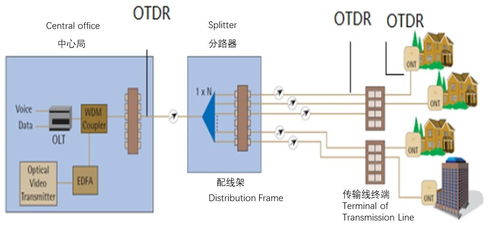
For engineers and professionals engaged in network communication engineering design and construction, implementing a fog layer involves careful planning of network topology, node placement, and traffic management. It requires a deep understanding of both wired (e.g., fiber optics for backhaul) and wireless technologies. Security considerations are paramount, as distributed fog nodes present a larger attack surface; thus, hardware-based security modules and robust authentication mechanisms are integral to the design.
In summary, fog computing represents a paradigm shift that complements 5G and IoT, driving innovation across industries. Its realization is a multidisciplinary effort, spanning communication protocols, semiconductor innovation, embedded design, and network engineering. Forums and communities focused on communication technology, IC design, and electronics, such as those mentioned, serve as vital platforms for knowledge exchange, collaboration, and troubleshooting, accelerating the development and deployment of these transformative technologies.